
Guide🌍Global
Late Payment Excuses in 2026: The AI-Written Wave (And How to Beat It)
Half of the polite payment excuses in your inbox weren't written by a human. Here's the data, the tells, and the response playbook.
7 min readJul 22, 2026
ReadMunich. A very private club, where the new doorman is Big Terry. House rule number one, engraved on the wall: never pay on time.
Konstantin von Albrecht chairs Feinkost Albrecht GmbH, fourteen delis in Munich, and pays his suppliers in year two. Ana Ferrer runs a family olive-oil business in Tarragona. She is owed €62,000, and she has read the house rules too.
Trick one: "We never received it." Counter: signed proof of delivery, and an invoice that carries the customer's PO number.
Trick two: "Next payment run." Counter: ask for the date, in writing. A dated promise is evidence.
Trick three: "The oil was cloudy." Counter: a first complaint on day 58, after goods were received in good condition, is a stall, not a dispute.
Trick four: "We can wait." Counter: know the limitation period (in Germany, three years counted from the end of the year) and act well before it ends.
Then Ana stopped arguing and filed a European Payment Order: one form, one court in Berlin, for uncontested cross-border claims inside the EU. No hearing. The debtor has 30 days to object. Konstantin was busy. The house rules were amended, and Ana was paid in full on day 74.
Ana's rules: 1. Paper trail before you ship. 2. Get the payment date in writing. 3. A late complaint is a stall. 4. Watch the limitation clock. 5. Cross-border in the EU? File the EPO.
A Collecty film. © Collecty, www.cllcty.com. Reproduction without permission is not allowed. All characters are fictional. This film is general information, not legal advice.
Half of the polite payment excuses in your inbox weren't written by a human. Here's the data, the tells, and the response playbook.

Endless bullet questions, license demands, and a "[Your Name Here]" sign-off. The AI questionnaire bomb is flooding B2B inboxes — here's how to handle it.

You gave your customer one more deadline, then another. Here is why patience quietly transfers your money to the debtor — and what the data says about timing.

The fee is not the question. The first 48 hours is the answer.

Credit insurance covers the loss. A collection agency recovers the money. Two different objectives.

Next month is a direction, not a date. How to tell a genuine delay from a stalling tactic.

An €8,000 write-off at 10% margin costs €80,000 in new sales to replace.

No signed contract doesn't mean no case. The evidence that actually counts in court.
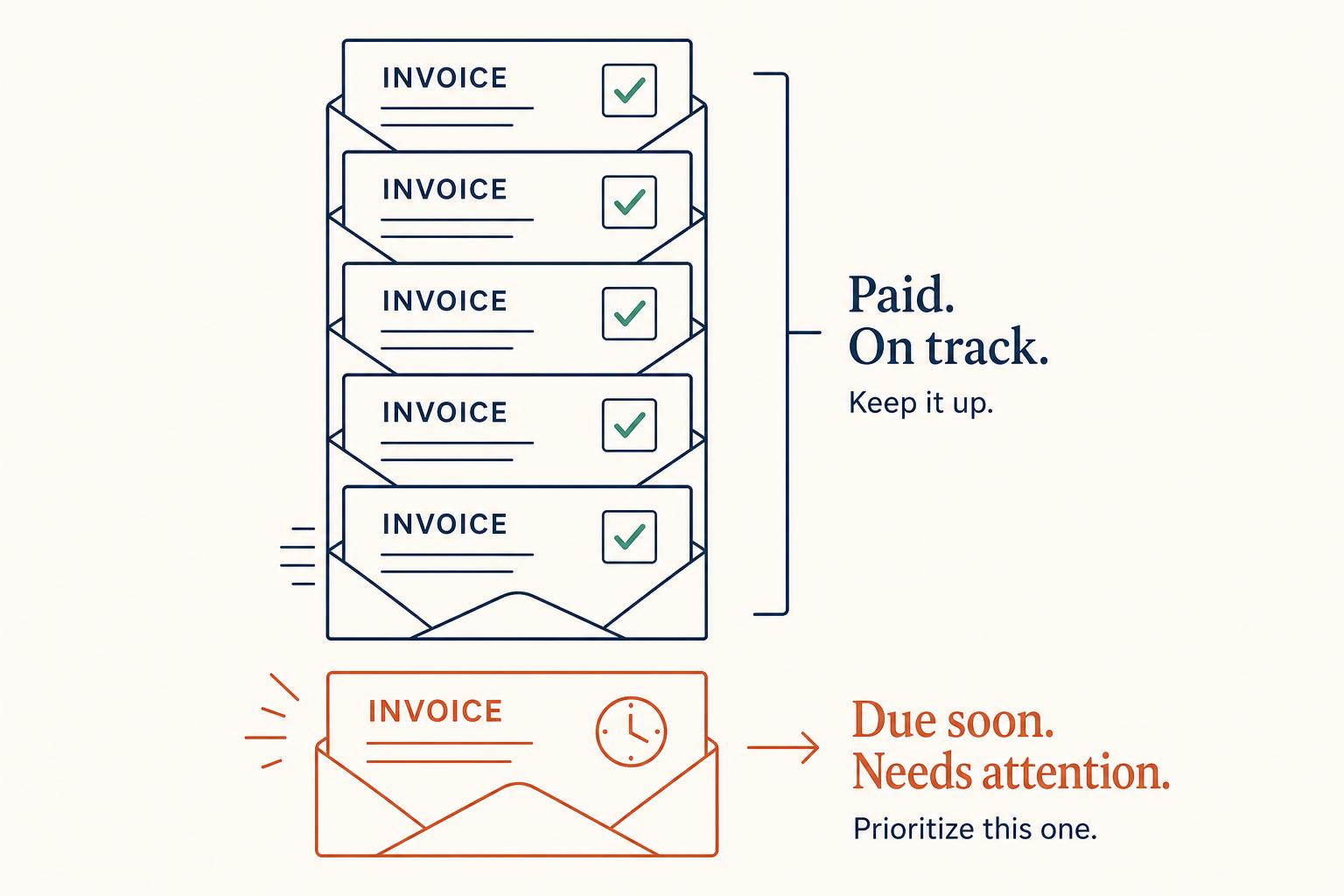
That is not insolvency. That is a priority list, and you are not on it.

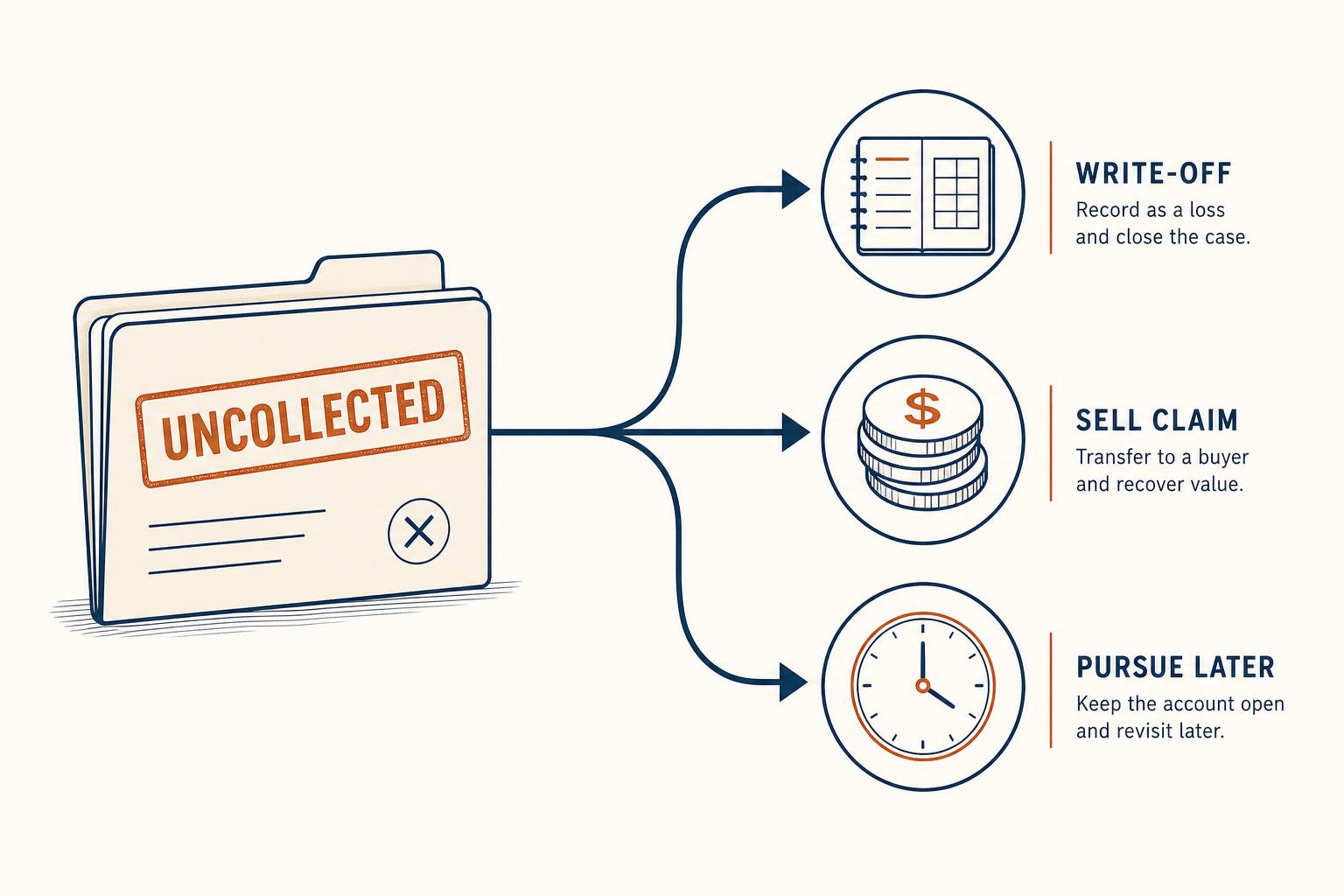
You lose the money. You do not lose the options.

By the time you collect, it might not be.