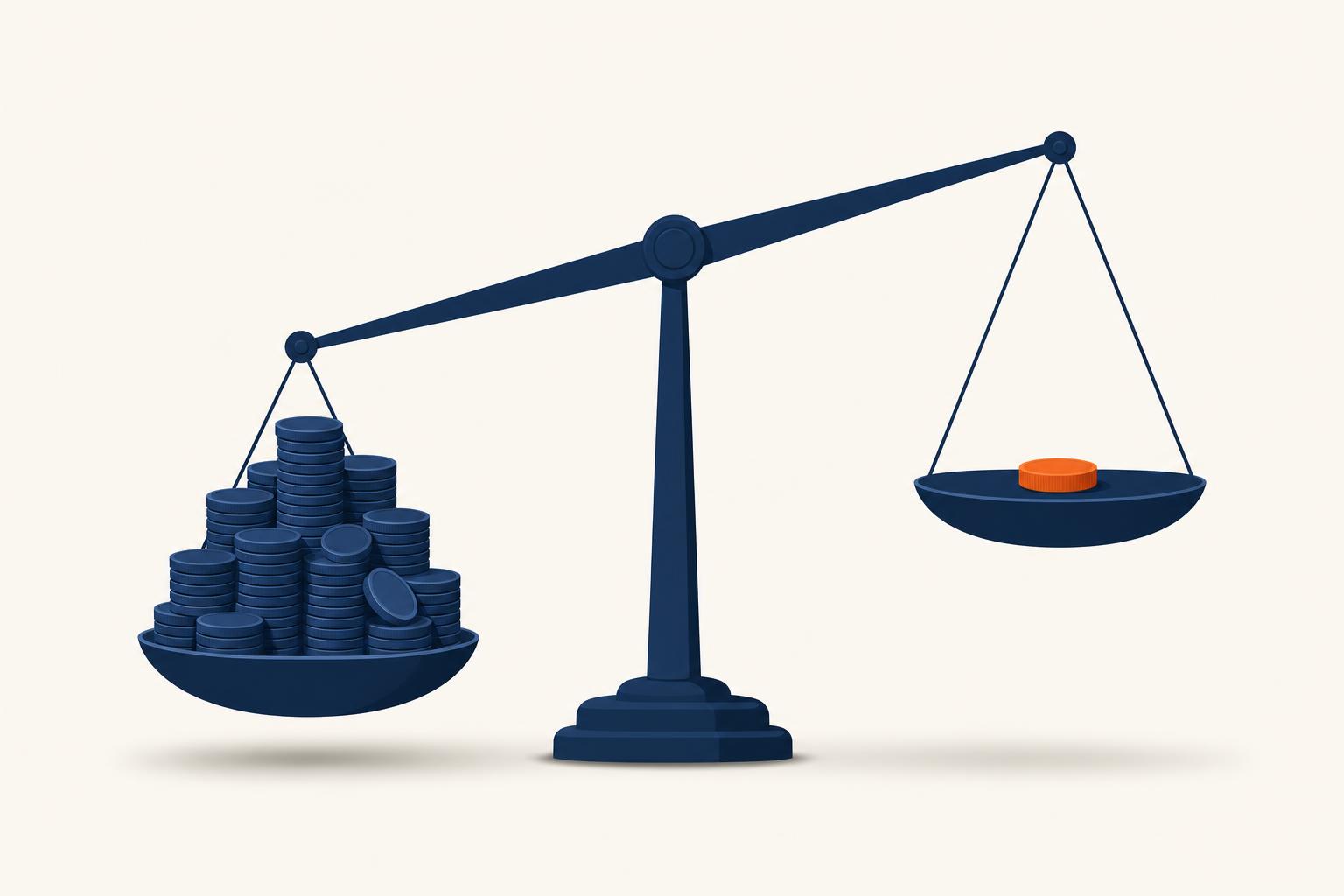
It covers the loss. It does not recover the money.
Your credit insurer pays you a percentage of the invoice — typically 75% to 90% — after the debtor defaults and you have waited the policy's qualifying period (usually 180 days). You file a claim. You receive compensation. The insurer takes over the receivable. The process is designed to protect your balance sheet, and it does.
What it does not do is get you paid the full amount, keep the commercial relationship intact, or resolve the problem before six months have passed. These are different objectives, and confusing them costs more than the premium.
What insurance does well
It protects against catastrophic loss. If your largest client defaults on €500,000, the insurer absorbs 80% to 90% of the hit. Without insurance, that write-off could threaten your solvency. With it, you lose €50,000 to €100,000 instead of €500,000. For companies with concentrated customer risk — where a single debtor represents 15% or more of revenue — this protection is not optional. It is structural.
It also provides pre-sale intelligence. Most trade credit insurers (Allianz Trade, Coface, Atradius) set credit limits on your buyers based on their own assessment of the debtor's financial health. If your insurer declines to cover a buyer, that is information — possibly the most valuable thing the policy provides.
What insurance does not do
It does not collect. When a debtor is 30 days late, your insurer does not send a demand letter. When a debtor is 60 days late and ignoring your emails, your insurer does not make a phone call in Turkish referencing the applicable commercial code. You are on your own for the first 180 days — precisely the period when the debt is most recoverable and when professional intervention has the highest success rate.
It does not pay the full amount. The payout is 75% to 90% of the insured value. On a €100,000 default, you receive €75,000 to €90,000. A collection agency recovering the same debt on a 15% contingency nets you €85,000. In most scenarios, successful collection produces a higher return than an insurance claim — and it produces it faster.
It does not preserve the relationship. An insurance claim closes the file. The debtor is written off. The relationship is over. Collection, by contrast, is a conversation — one that, in more than 60% of professionally managed cases, leads to resumed trading after the debt is resolved.
When you need both
The answer is straightforward: you need insurance for debts you cannot afford to lose, and a collection agency for debts you want to recover. For most international B2B exporters, this means insurance on your top 10 clients by exposure, and a collection partner for everything that goes overdue.
The insurer is your safety net. The collection agency is your first responder. They operate on different timelines, different fee models, and different objectives. Using one as a substitute for the other is like carrying health insurance and skipping the doctor — the coverage exists, but the problem does not get treated.
The €100,000 comparison
Your client defaults on €100,000. Two paths:
Insurance claim after 180 days: you receive €80,000 (at 80% coverage). Net recovery: €80,000, six months later, relationship terminated.
Collection agency at day 45: the agency recovers the full amount within 90 days at a 12% contingency. Net recovery: €88,000, three months later, relationship intact.
The agency route produces €8,000 more, three months faster, with the option to continue trading. The insurance route produces less, later, and final.
Insurance is not wrong. It is incomplete.

Marcus Chen
Senior Collections Strategist
Marcus brings 15 years of international debt recovery experience, specializing in cross-border B2B collections across Europe and Asia-Pacific.