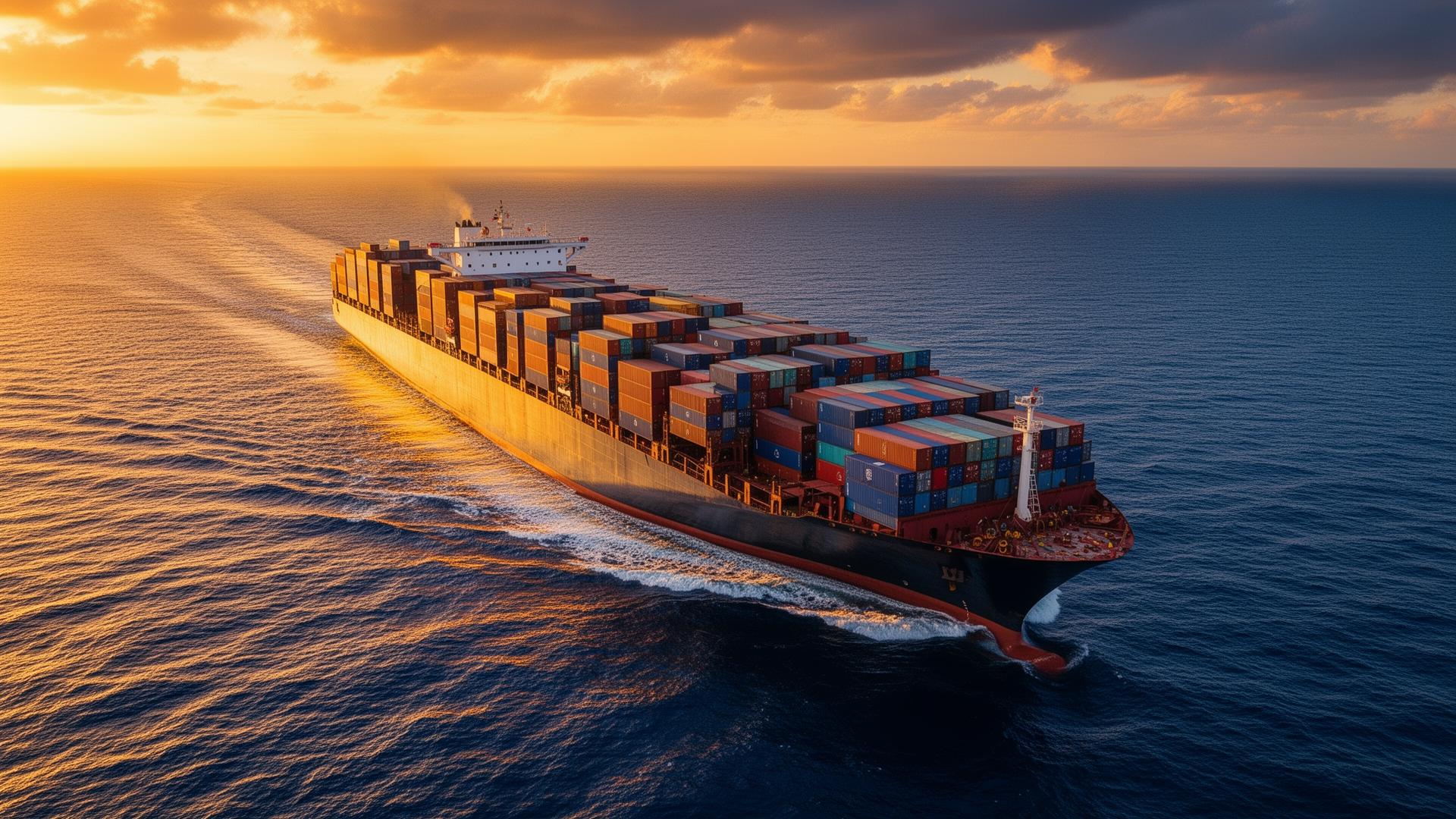
A debt collector Rotterdam service helps port service providers, freight forwarders, and logistics companies recover overdue B2B invoices by standardizing evidence packs (proof of service, delivery milestones, entity clarity), conducting compliant outreach, isolating genuine disputes from payment stalls, and governing escalation—all tailored to Rotterdam's maritime and logistics sectors. Containers move daily across Europe's largest port; payments shouldn't need a tugboat to follow.
This guide is built for finance and AR teams operating in Rotterdam's port and logistics environment. Whether you're chasing a demurrage invoice, freight forwarding fees, or ship supply charges, the Rotterdam-specific workflows below will help you move from overdue to recovered—or at least to a clear next step.
When should you consider a Rotterdam debt collector service?
Hit 3+ of these? It's time to bring in the pros.
Port service/logistics invoice 45+ days overdue
Payment terms in port services are often shorter—45 days overdue signals systemic issues, not temporary cash flow.
Acceptance/delivery proof unclear (milestone disputes)
If you can't prove when service was completed or goods were released, collection becomes guesswork.
Agent vs principal confusion (who owes?)
Shipping chains involve agents, principals, forwarders, and consignees—wrong entity = wasted weeks.
Late dispute after container release / service completion
Disputes raised after release often indicate leverage attempts, not genuine issues.
Wrong legal entity invoiced (KVK mismatch)
Netherlands law requires precision; invoicing the wrong entity creates collection barriers.
Cross-border Incoterms / jurisdiction complexity
When multiple countries, Incoterms, and legal systems intersect, internal collection often stalls.
Before you hire, do 3 things:
Who this is for
- Port service providers: towage, pilotage, mooring, ship supply, bunker suppliers
- Freight forwarders and logistics companies: container handling, warehousing, transport
- Shipping lines, agents, and brokers operating through Rotterdam
- CFO, Finance, and AR teams dealing with overdue maritime and logistics invoices
Why is Rotterdam different from other B2B collections markets?
Europe's largest port
: Rotterdam handles 450+ million tonnes annually, creating high-volume, cross-border, multi-entity transactions where payment chains are complex by default.
Direct, no-nonsense business culture
: Rotterdam's business mentality is action-oriented. Lengthy negotiation rounds that work elsewhere may signal weakness here—evidence and clarity get results.
Common industries
: Maritime services, port operations, freight forwarding, logistics, oil/gas/chemicals, container handling, ship supply.
Typical scenarios
: Demurrage disputes, acceptance proof gaps, agent/principal confusion, Incoterms clarity issues, multi-party shipping chain disputes.
Pragmatic mindset
: Rotterdam was rebuilt from WWII rubble with modern architecture and efficiency. That same pragmatism applies to business—evidence and action over endless back-and-forth.
What are the most common B2B invoice disputes in Rotterdam (port & logistics)?
Port and logistics invoices face specific dispute patterns. A debt collection agency Rotterdam for businesses sees these scenarios repeatedly:
- Container demurrage/detention disputes: Disagreements over when free time ended and charges began.
- Port service timing disputes: When did towage, pilotage, or mooring service actually start and end?
- Freight delay → acceptance proof gaps: Delays create documentation gaps; debtors exploit unclear handoff points.
- Agent invoiced wrong entity: Agent vs principal liability confusion—forwarder claims they're just the agent, not the payer.
- Partial delivery/damaged goods claims: Short shipments or damage used to dispute entire invoices.
- Incoterms misunderstandings: Who pays what, and when responsibility transfers—especially FOB vs CIF confusion.
- Late disputes raised after container release: Debtor releases container, then raises disputes weeks later.
- Multi-party shipping chain confusion: Carrier, forwarder, shipper, consignee—invoice bounces between entities.
- Cross-border jurisdiction complexity: Dutch invoice, German debtor, goods shipped to Poland—who enforces where?
- Missing documentation: Bills of lading, delivery orders, or release documentation not retained or not matching invoice.
When should you hire a debt collector in Rotterdam vs keep it internal?
Hit 3+ of these? It's time to bring in the pros.
Days overdue
30 days = internal follow-up; 45 days = structured escalation; 60+ days = external collection consideration (port services often have shorter payment terms than general B2B).
Material invoice amount
Internal cost-benefit calculation—collection fees typically make sense above certain thresholds.
Debtor unresponsive
After 2 structured emails + 1 call with no substantive response, internal leverage may be exhausted.
Acceptance/delivery proof unclear
If you can't prove service completion, collection becomes a documentation exercise first.
Agent vs principal confusion
When you're not sure who legally owes, external expertise prevents months of wrong-party chasing.
Cross-border debtor or asset complexity
Enforcement across borders requires local knowledge and networks.
Multiple entities in shipping chain
When liability is disputed across 3+ parties, structured triage accelerates resolution.
Before you hire, do 3 things:
The Rotterdam Port-Proof Gates™ Method
Every case passes through 6 checkpoints. Skip one, and you'll circle back later—wasting time and money.
Outcome definition
Evidence Pack readiness (Rotterdam Port-Proof Pack v1)
Entity + authority verification (KVK + agent/principal clarity)
Acceptance/delivery milestone proof
Dispute boundary (isolate genuine vs stalling)
Escalation governance + reporting cadence
Pro tip: Gates 0-2 should be complete before first contact. If you're missing any, you're starting the conversation weak.
Why do some Rotterdam cases move fast while others stall?
Missing bills of lading, wrong entity invoiced, vague "we're checking" disputes, no acceptance proof
These blockers can add weeks. Missing bills of lading in Rotterdam is like missing a passport at Schiphol—you're not going anywhere.
Debtor responds but delays commitment dates, partial payment willingness, AP batch friction, cross-border banking delays
Progress is possible but requires structured follow-up. Banking delays across borders are real; patience is sometimes necessary, but not indefinite.
Clean evidence pack, clear KVK/entity, acceptance proof strong, written commitment date, decision owner mapped
These cases move. Rotterdam's directness works both ways—clear evidence gets clear responses.
"The debtor is 'reviewing the invoice'… since last quarter."
— Every AR team, ever
Speed multiplier:
Cases with partial payment history + clean documentation resolve 3× faster on average.
What documents matter most for port & logistics invoices (Rotterdam Port-Proof Pack v1)?
| Item | Why it matters (Rotterdam context) | Common gap (and quick fix) |
|---|---|---|
| Contract/order confirmation + payment terms | Establishes agreement basis and payment expectations | No signed contract → retrieve order confirmation emails |
| Invoice(s) + due dates | Core claim documentation | Invoice not sent to correct entity → verify KVK and resend |
| Statement of account (SOA) | Shows invoice history and outstanding balance | SOA not updated → regenerate with all invoices and payments |
| Service records (port logs, towage records, bunker notes) | Proves service was actually delivered | No service records → request from operations team |
| Delivery/acceptance proof (bills of lading, delivery orders, container release, milestone sign-offs) | Critical for milestone disputes; proves handoff completed | Release without sign-off → structured email requesting confirmation |
| Debtor legal entity details (registered name, KVK number, agent vs principal clarity) | Netherlands requires precision; wrong entity blocks collection | Entity unclear → KVK search + correspondence review |
| Communication log + payment promises | Documents debtor acknowledgment and commitments | Verbal promises not logged → summarize in follow-up email |
| Dispute notes + undisputed calculation | Separates collectible portion from disputed amounts | Dispute not isolated → create Dispute Boundary Memo |
| Payment instructions + bank details (IBAN) | Removes friction for payment execution | IBAN not on invoice → add to every communication |
| Incoterms reference + jurisdiction clause (if applicable) | Determines responsibility transfer points and enforcement venue | Incoterms not specified → review original agreement for implied terms |
How do you handle agent vs principal confusion (who actually owes the money)?
A professional overseas invoice collection service does more than send reminder emails. Here's the real workflow:
Review original contract/order
Who signed? Who is named as the payer? The document often resolves the question.
Check KVK records for both entities
Verify legal names and registration details—sometimes "agents" are actually principals operating under a different name.
Review correspondence
Who acknowledged the invoice? Who requested the service? Email trail often reveals the true obligor.
Apply commercial agency principles (high-level)
In many jurisdictions, agents who don't disclose principal identity may bear liability. Requirements vary; consult local counsel where needed.
Route demand to both if unclear
When liability is genuinely ambiguous, demand to both parties with evidence that clarifies—forces the correct party to respond.
The best agencies don't just chase—they diagnose why you're not getting paid first.
Copy/paste templates — Rotterdam Port-Proof Dispute-Control Pack
Subject: [Company Name] – Service Completion Confirmation Request (Invoice #[XXX])

Dear [Name],
What we see in real Rotterdam port & logistics cases (patterns that predict speed)
Agent vs principal clarity is critical
This is the top delay driver—weeks lost chasing the wrong entity are weeks you don't get back.
KVK/entity verification prevents wrong-party chasing
A 10-minute KVK search saves 10 weeks of misdirected effort.
Incoterms clarity reduces jurisdiction friction
When both parties agree on responsibility transfer points, cross-border complexity drops significantly.
Late disputes are often leverage attempts
When disputes appear weeks after container release, timing suggests strategy rather than genuine concern.
Acceptance proof strength predicts outcomes
Cases with signed delivery orders and milestone confirmations close faster than those relying on verbal agreements.
Cross-border banking delays are real but predictable
SEPA transfers are fast; international wires take longer. Build this into expectations.
Clean bills of lading accelerate resolution
When delivery documentation is clear and complete, disputes have nowhere to hide.
Written commitment dates turn stalls into action
"We'll pay soon" means nothing; "We'll pay €X by [date]" creates accountability.
Reporting discipline prevents loops
Weekly progress tracking stops "we're working on it" from becoming a permanent status. Rotterdam's rebuilt skyline proves things can actually get done.
Escalation governance avoids surprise costs
Escalating without approval and clear next steps creates legal fees without corresponding recovery.
"The debtor is 'reviewing the invoice'… since last quarter."
— Every AR team, ever
Speed multiplier:
Cases with partial payment history + clean documentation resolve 3× faster on average.
If you only do 3 things, do these
- Build your Rotterdam Port-Proof Pack v1: Index all documentation—contract, invoices, service records, acceptance proof, entity details. Gaps before pressure = leverage lost.
- Isolate disputes + request undisputed portion + written payment date: Separate what's genuinely disputed from what's owed. Get commitment in writing.
- Escalate by rule with approvals + weekly reporting: No emotional escalation, no endless internal loops. Clear triggers, clear governance, clear reporting.
Country workflow: pick the next best step
Pick the next best step
10 interesting facts about Rotterdam
Before we return to invoices, here are 10 facts about Rotterdam—a city that rebuilt itself and keeps moving:
Rotterdam is home to Europe's largest…
port and was the world's busiest port until 2004, when Shanghai took the title.
️ The city center was almost…
completely destroyed by German bombing in 1940 and rebuilt with bold modern architecture.
Rotterdam has over 800 bridges
more than Venice—though most are smaller and less photographed.
The Cube Houses (Kubuswoningen) are tilted…
45 degrees; residents learn to live with diagonal walls.
Rotterdam hosted the first Tour de…
France start outside France (Grand Départ) in 2010.
The Euromast tower offers panoramic views…
from 185 meters—and a zipline for those who prefer speed over scenery.
️ Rotterdam handles 13% of all…
goods transported in Europe, including a significant portion of oil and chemicals.
The city is known for its…
street art and contemporary architecture, contrasting with Amsterdam's canal house aesthetic.
Feyenoord Rotterdam is one of the…
Netherlands' "Big Three" football clubs, with passionate supporters.
Rotterdam lies below sea level and…
relies on extensive water management systems—Dutch engineering at work.
Sources: Tours-Tickets, Dutch Review, World City Trail
Rotterdam rebuilt from rubble; your invoices shouldn't stay buried.
FAQ
Next step
The Rotterdam Port-Proof Gates™ Method brings structure to port and logistics invoice recovery: evidence first, entity clarity second, dispute isolation third, escalation by rule. No hype, no guaranteed outcomes—just disciplined process matched to Rotterdam's no-nonsense business culture.
For a Rotterdam collections assessment, request a triage call. We'll review your invoice type, debtor profile, and documentation—then map the next move.
Rotterdam doesn't wait. Neither should your invoices.

Sarah Lindberg
International Operations Lead
Sarah coordinates our global partner network across 160+ countries, ensuring seamless cross-border debt recovery.
![Hong Kong Debt Collection Agency: Asia Trade Hub B2B Guide [2026]](/images/blog/hong-kong-debt-collection-agency-hero.jpg)