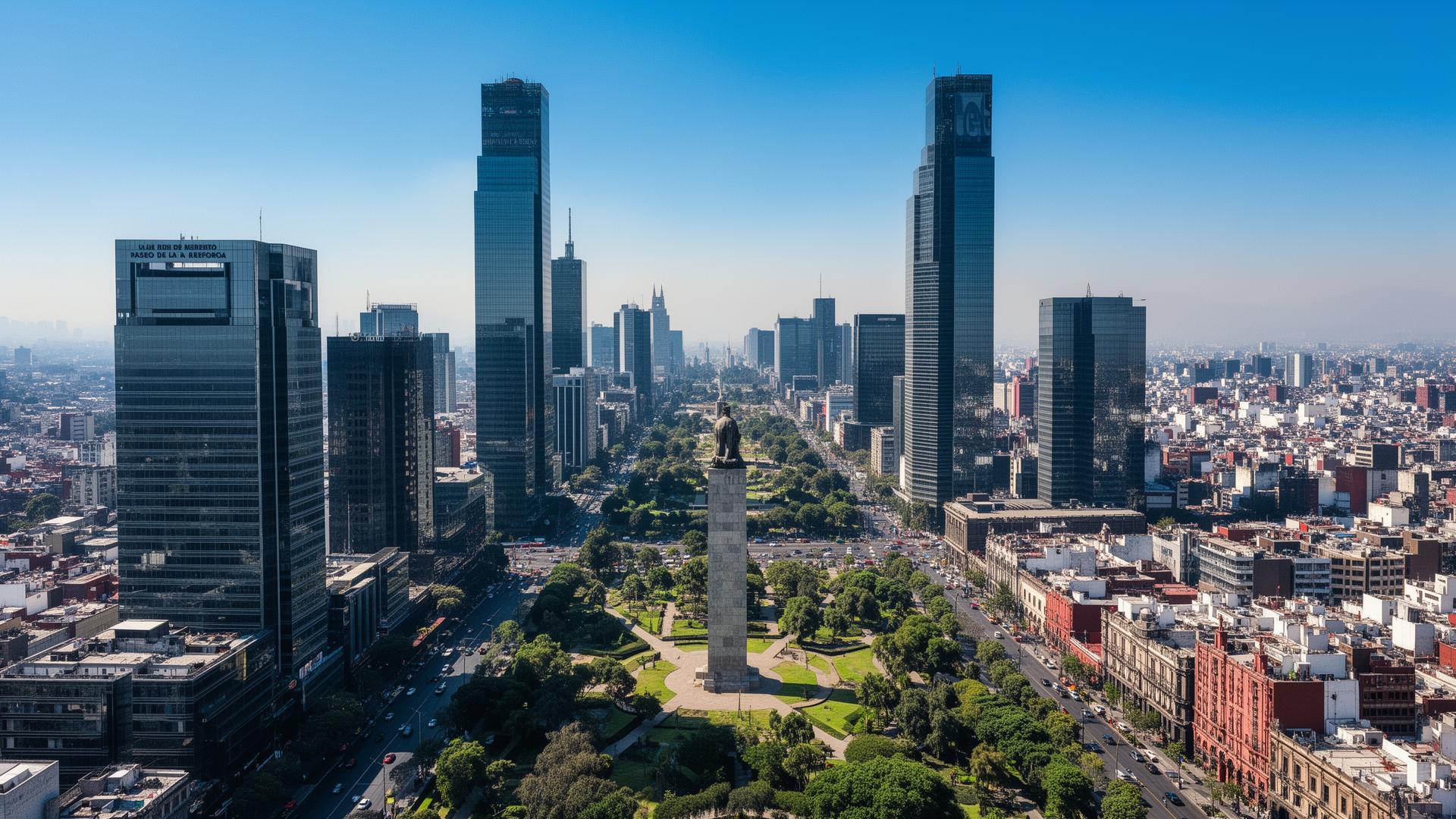
Net 45 stretched to Net 120 and your Monterrey contact says "la próxima semana" (next week) for the third month running. You've sent seven follow-ups in English, but the decision-maker at the maquiladora who signed the purchase order is now "en reunión" (in a meeting) every time you call, and nobody else will commit to a payment date.
The invoice references a Monterrey S.A. de C.V., but they redirect you to the Mexico City corporate office. Mexico City says the Tijuana plant handles supplier payments. Entity confusion across Mexican states and IMMEX structures—and your invoice sits unpaid while they continue shipping products across the US border under USMCA terms.
You have the signed contrato (contract), the factura (invoice), and delivery confirmations—but the purchase order was in English, the contract's in Spanish, and they're now claiming "quality inspection pending" on parts you shipped 95 days ago. Welcome to collecting business debt from Mexico.
If this sounds familiar, you're in the right place:
- Net 30-45 terms routinely drift to Net 90-120+ with "el próximo mes" (next month) or "está en proceso" (it's in process) responses
- Acceptance disputes appear only after payment requests (maquiladora quality specs, manufacturing tolerances, USMCA origin requirements)
- Entity confusion: S.A. de C.V. headquarters vs IMMEX maquiladora vs state subsidiaries (nobody owns the invoice)
- Decision-maker who signed the purchase order is "unavailable" or transferred to another plant
- Evidence scattered: Spanish contracts, English purchase orders, factura requirements unclear, delivery docs in different systems
- Language barriers: Mexican business conducted in Spanish, legal documentation not translated
- USMCA complications: cross-border manufacturing, rules of origin disputes, customs documentation gaps
- Factura fiscal (tax invoice) missing or incorrect, blocking payment processing
- Currency considerations: USD vs MXN pricing disputes, exchange rate timing
- Mexican bureaucracy: "necesitamos más documentación" (need more documentation) with no clear list
What changes when Collecty runs the file:
- Evidence pack assembled in first 48 hours (contrato, factura, acceptance proof, delivery docs—Spanish/English)
- Entity and decision-owner mapping across Mexican states (who actually approves payments in Mexico City, Monterrey, Guadalajara, Tijuana structures)
- Industry-aware, Spanish-capable outreach (we work in Spanish and English for manufacturing, maquiladoras, automotive, aerospace)
- Acceptance reconstruction when "quality" or "specification" disputes appear after delivery
- Mexico-aware escalation routing (court thresholds, USMCA considerations, cross-border enforcement options)
- Documented reporting cadence (you know what's happening, why, and what's next—in English)
- Relationship-smart persistence (US-Mexico trade ties protected where possible, understanding Mexican business culture)
Collecty works Mexico B2B files from $5K to $2M+ USD, across manufacturing, maquiladoras, automotive, aerospace, and cross-border trade—evidence-first, Spanish-capable, USMCA-aware across Mexico City, Monterrey, Guadalajara, Tijuana, and Ciudad Juárez. See our Latin American locations for full coverage.
⏰ Every 30 days adds friction
Cross-border relationships cool when payments stall. Production schedules shift—and so does leverage. Decision-makers change roles. Evidence trails fade. Mexican statute clocks tick (10-year commercial claims). The first 90 days matter most for US-Mexico cross-border files.
Why is collecting business debt from Mexico different?
Mexico isn't just another Latin American market—it's the United States' largest trading partner, deeply integrated through USMCA supply chains, maquiladora manufacturing, and decades of cross-border business relationships. That integration creates unique collection dynamics: relationships matter enormously, but so does understanding the specific structures of Mexican manufacturing and trade.
The maquiladora/IMMEX system adds complexity. These manufacturing facilities operate under special customs regimes, often as subsidiaries of US or international parent companies. When an IMMEX operation owes you money, determining which legal entity is actually liable—and where payment authority sits—requires understanding structures that generic collection approaches miss.
Mexican documentation requirements are formal. The factura fiscal (tax invoice) must be correctly formatted with the right RFC (tax ID), proper CFDI requirements, and accurate product codes. Incorrect facturas can legitimately block payment processing through Mexican accounting systems.
Add the relationship-driven nature of Mexican business culture (personal connections unlock payments faster than legal threats), Spanish-language requirements for formal proceedings, and court timelines that test patience, and you understand why international B2B collection services for Mexico require specialized knowledge. The good news: US-Mexico business ties are so deep that structured, culturally-aware approaches get results.
Which industries generate the most B2B collection cases in Mexico?
| Scenario | What usually stalls payment | What usually resolves it (evidence-first) |
|---|---|---|
| Automotive parts supplier (Monterrey) | "Quality rejection" appearing 60 days post-delivery; parts already in production | Incoming inspection sign-off + production usage records + purchase order specs + signed contrato + correct factura |
| Maquiladora contract manufacturing (Tijuana) | Entity confusion: "Mexico City office handles this, not our IMMEX plant" | Contract mapping to correct S.A. de C.V. entity + IMMEX registration verification + delivery to correct facility + purchase order chain |
| Aerospace components (Querétaro) | "Certification documentation incomplete" blocking payment release | Cert of conformance + material test reports + AS9100 documentation + delivery sign-off + acceptance at incoming inspection |
| Electronics assembly services (Guadalajara) | "Specification change requires credit memo adjustment" | Original PO with specs + ECN/change order documentation + acceptance of modified units + revised pricing agreement |
| Cross-border freight (Laredo-Nuevo Laredo) | "Customs documentation missing for payment processing" | Bill of lading + pedimento (customs entry) + delivery confirmation + POD + correct factura de servicios |
| Medical device manufacturing (Baja California) | "FDA clearance pending, can't release payment until approved" | Contrato payment terms (milestone vs. approval-based) + manufacturing completion sign-off + quality release documentation |
Why not DIY / lawyer-first / write it off?
| Approach | Typical Outcome | When It Works |
|---|---|---|
| DIY follow-up | Low response after 3-4 attempts; relationship dynamics unclear; no leverage without understanding Mexican business culture; escalation path uncertain | Small amounts, strong existing relationship, clear acceptance, ongoing business you want to preserve |
| Lawyer-first | High cost upfront ($8K-30K+ USD); relationship damage in relationship-driven culture; Mexican court timelines 18-36 months; translation costs | Large amounts ($150K+ USD) with litigation budget; relationship already broken; clear liability; assets clearly in Mexico |
| Write it off | 100% loss; precedent set with other Mexican customers; weakens position in USMCA supply chain relationships | Amount below $3K USD; debtor insolvency confirmed; contract fundamentally flawed; no factura ever issued |
How The Mexico Cross-Border Protocol™ works
5-phase USMCA-calibrated collection for maquiladora and cross-border trade
Verify company via Registro Público de Comercio, map maquiladora/cross-border structure.
- Pull RFC and company registration
- Identify maquiladora vs domestic entity
- Map US parent company relationships
Build Mexican-compliant evidence with interest per Código de Comercio.
- Calculate intereses moratorios (TIIE + 6%)
- Index factura + carta porte
- Prepare contrato and T&C terms
Calibrated outreach in Spanish respecting Mexican business culture.
- Initial requerimiento in formal Spanish
- Phone follow-up to contabilidad
- Escalation to director financiero
Pre-legal requerimiento formal with explicit timeline.
- Send formal requerimiento via fedatario público
- Reference Código de Comercio provisions
- Set 15-day response deadline
Route via Juicio Ejecutivo Mercantil or alternative enforcement.
- Juicio Ejecutivo Mercantil for commercial
- Coordinate with abogado mercantilista
- Consider PROFECO for consumer-adjacent
⚖️ Route via Juicio Ejecutivo Mercantil or PROFECO
What happens in the first 48 hours after you submit a Mexico file?
- Hour 0-8: Evidence intake, Spanish/English document review, factura compliance check, RFC verification, IMMEX structure analysis if applicable
- Hour 8-24: Contract analysis + entity/decision-owner research (S.A. de C.V. structures, Mexico City/Monterrey/Guadalajara/Tijuana locations, maquiladora affiliations)
- Hour 24-36: Industry-specific outreach strategy mapped (automotive/aerospace/electronics tone, Spanish-language preparation, relationship context from supply chain position)
- Hour 36-48: First contact attempt (Spanish or English as appropriate) + reporting cadence confirmed
You'll know: What evidence gaps exist, who owns the payment decision across locations, factura status, entity structure clarity, and the next three moves.
What are maquiladoras and why do they matter for Mexican collections?
Maquiladoras—now formally called IMMEX operations—are manufacturing facilities operating under Mexico's special customs regime. They import raw materials and components duty-free, manufacture or assemble products, and export the finished goods (primarily to the US). This structure creates specific collection considerations.
IMMEX operations are often subsidiaries of larger corporate groups, sometimes with parent companies in the US or other countries. When an IMMEX plant owes you money, determining the correct legal entity to pursue—and where payment authority actually resides—requires understanding these structures. The plant manager in Tijuana may not have payment authority; that might sit with a corporate office in Mexico City or even a US parent.
For international B2B collection services, maquiladora files require additional entity analysis to route collection efforts correctly. The good news: these operations are often part of established supply chains with ongoing relationships, which provides leverage for resolution when approached correctly.
How does USMCA affect cross-border debt collection?
The United States-Mexico-Canada Agreement (USMCA, replacing NAFTA) governs most US-Mexico trade relationships but doesn't directly govern debt collection. However, USMCA creates important context for cross-border B2B disputes.
Rules of origin requirements under USMCA can become payment dispute pretexts. A debtor might claim that documentation issues affecting USMCA compliance justify withholding payment—even when the underlying goods were delivered and accepted. Understanding which USMCA claims are legitimate vs. tactical requires supply chain expertise.
The deep integration of US-Mexico supply chains under USMCA also creates leverage. A Mexican manufacturer who depends on US suppliers—or US customers—has incentives to maintain good relationships and credit standing. The Mexico Cross-Border Protocol™ understands how to use this context appropriately without damaging ongoing business relationships.
Court enforcement across the US-Mexico border remains complex despite USMCA. Mexican judgments aren't automatically enforceable in the US, and vice versa. This reality makes amicable resolution—before litigation—significantly more valuable for most cross-border claims.
Fast triage in 10 minutes
Share invoice amount, industry (automotive, aerospace, maquiladora, electronics), debtor city (Mexico City, Monterrey, Guadalajara, Tijuana), and days overdue—we'll map the next Mexico-compliant, Spanish-capable move.
Start assessment📌 If you only do 3 things this week
- Organize your bilingual documentation: contrato (contract), factura (invoice), purchase orders, delivery confirmations—both Spanish and English versions in one folder
- Map the Mexican decision-owner: find who actually approves payments (not just the purchasing contact or plant manager—often someone in Mexico City or Monterrey corporate)
- Verify factura accuracy: incorrect tax invoices with wrong RFC or CFDI issues can legitimately block payment—fix it first if there's any question
What do automotive manufacturing invoices need in Mexico?
Automotive is Mexico's largest manufacturing sector, and automotive collections have specific documentation requirements:
- Purchase orders with specifications: Part numbers, revision levels, quantities, pricing—the PO is often the primary contract document in automotive
- Incoming inspection records: Most automotive manufacturers inspect incoming parts. Their own inspection sign-off showing acceptance is powerful evidence.
- Production usage records: If your parts went into production (built into vehicles), quality disputes become much harder to sustain
- Quality documentation: PPAP submissions, material certs, dimensional reports—whatever was required for part approval
- Correct factura: With proper RFC, product codes matching PO, and CFDI compliance
Quality disputes are common in Mexican automotive—"ppm rejection" or "specification non-conformance" claims that emerge only when payment is due. The Mexico Cross-Border Protocol™ reconstructs the acceptance timeline: if parts passed incoming inspection and went into production, late-emerging quality claims often don't hold up under scrutiny.
How do you collect from a Mexican company if you're based in the United States?
US companies collecting from Mexican debtors have structural advantages—deep business ties, shared supply chains, and often ongoing commercial relationships. But challenges remain:
- Language: Mexican courts operate in Spanish. All documentation for formal proceedings requires certified translation. Business communication in Spanish builds trust and gets faster responses.
- Entity verification: Mexico's RFC registry confirms entity status and registered address. Many Mexican companies have complex structures across states and business units.
- Factura requirements: Mexican tax law requires proper factura fiscal documentation. Without valid factura, payment processing through Mexican accounting systems may genuinely be blocked.
- Time zones: Central Time alignment with much of the US helps, but manufacturing plants operate on their own schedules.
- Judgment enforcement: US judgments aren't automatically enforceable in Mexico. While reciprocity agreements exist, enforcement adds significant time and cost.
- Relationship leverage: Ongoing business relationships—future orders, supply chain position, credit references—often matter more than legal threats.
Collecty maintains Spanish-language capability and deep Mexican manufacturing expertise specifically because US-Mexico cross-border collection requires understanding both the formal requirements and the relationship dynamics.
Frequently asked questions about Mexico debt collection
Who this isn't for
If you're hoping to skip the relationship-building that Mexican business culture expects, want guaranteed outcomes regardless of factura accuracy, or need someone to make aggressive threats that will damage your supply chain position—we're not the right fit. The Mexico Cross-Border Protocol™ works evidence-first and relationship-aware, which means sometimes the honest answer is "your contract doesn't clearly establish liability" or "your incoming inspection records actually support their claim."
Ready to collect your Mexico B2B invoices?
Mexico B2B collections work when evidence is organized (bilingual contrato, correct factura, PO and delivery confirmations), decision-owners are mapped correctly across manufacturing structures, acceptance is reconstructed from inspection and production records, and escalation follows Mexican requirements while preserving USMCA supply chain relationships. No guarantees—but structured Spanish-capable persistence beats English-only scattered follow-ups. If your invoice is stuck in Monterrey, Mexico City, Guadalajara, or beyond, and you've tried the standard moves, let's map the next step.
Need Mexico-specific next steps?
Sarah Lindberg
International Operations Lead
Sarah coordinates our global partner network across 160+ countries, ensuring seamless cross-border debt recovery.


